
Intelligent Geometry Monitoring in uST Transport Complexes
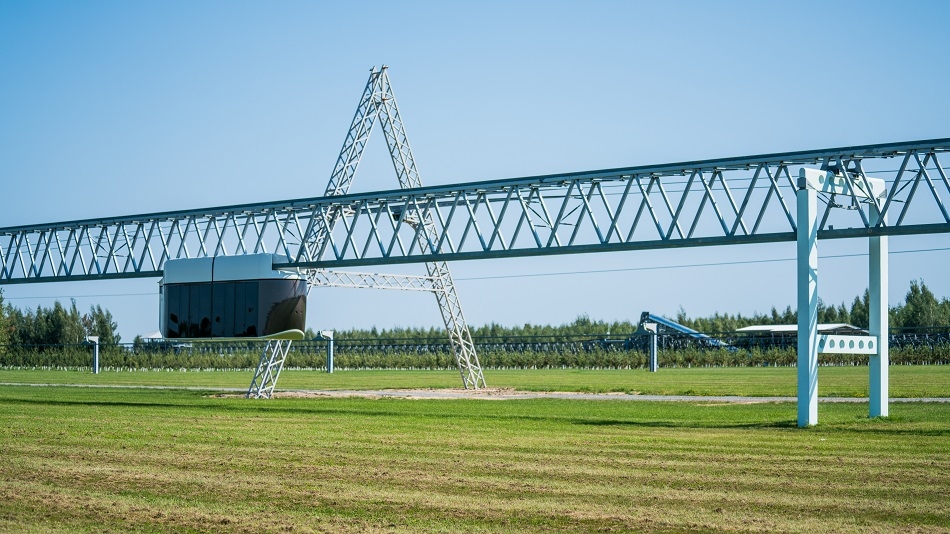
Modern transport systems are becoming “smart” not only through automation of movement but also thanks to the ability of the track structure itself to determine its condition. In uST string rail complexes, this task is solved by a new monitoring system for tilt angles and linear displacements, developed by engineers at Unitsky String Technologies Inc.
Its purpose is not simply to record changes in the geometry of the track structure, but to identify potential deviations in advance and issue warnings before they can affect the operational characteristics of the transport complex.
Why It Is Important to Monitor Tilts and Displacements
The uST transport and infrastructure complex is a high-precision engineering system consisting of a pre-stressed string rail track, anchoring structures, and supporting towers. The geometric stability of all elements directly affects the accuracy of the trajectory, smoothness of movement, and durability of the unmanned rolling stock.
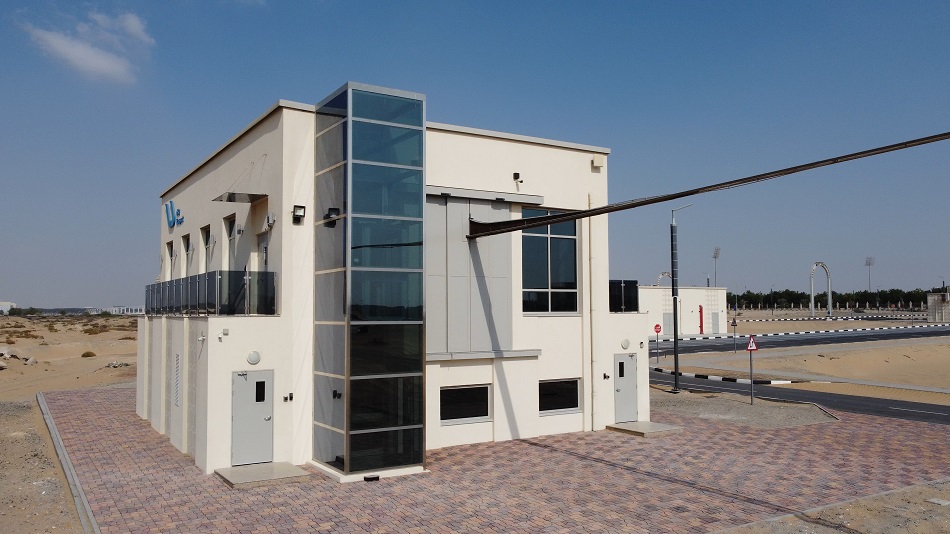
Temperature fluctuations, wind loads, foundation settlement, or seismic impacts can gradually change the position of supports. If such deviations are not detected, the architectural integrity and stability of the track structure may be compromised.
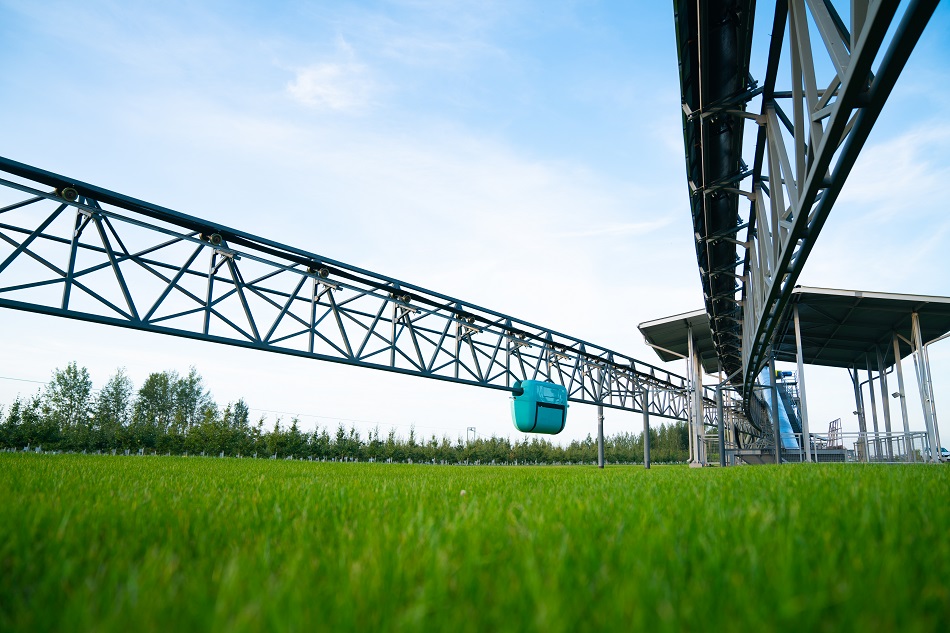
Previously, these parameters were controlled through periodic geodetic measurements. Today, this function is performed by an automated continuous monitoring system, operating around the clock.
How the Monitoring System Works
The monitoring system for tilt angles and linear displacements in uST complexes is an integrated measuring system that includes:
- High-precision inclinometers installed on anchoring structures and supporting towers.
- Linear and optical sensors registering micro-movements along x, y, and z coordinates.
- A data transmission module and a controller with self-diagnostic functions.
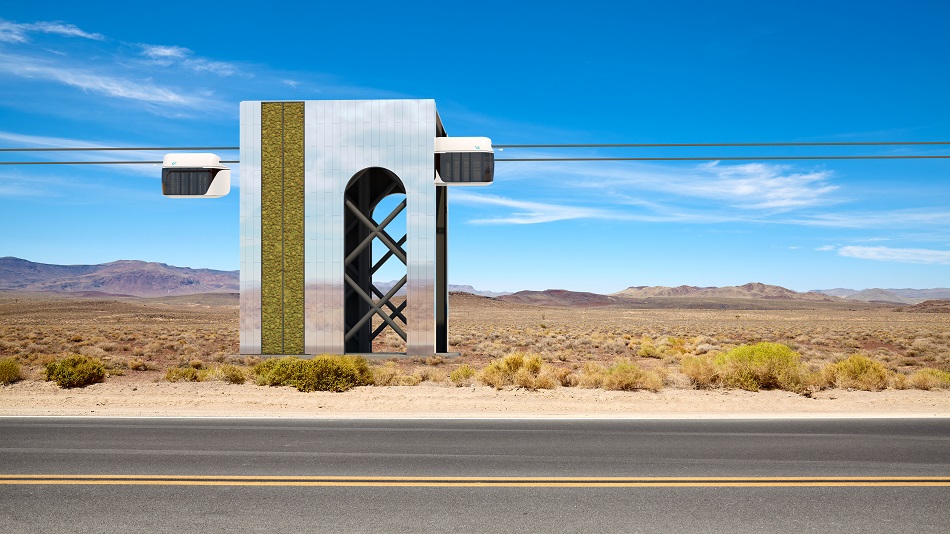
Inclinometers record changes in tilt angles relative to Earth’s gravitational field with an accuracy of up to 0.01°, while linear sensors detect displacements of about 0.1 mm. All data is transmitted in real time to a digital monitoring platform, where it is visualized as graphs, diagrams, and dynamic maps of structural condition. The operator of the Automated Control System receives not just numerical values but a complete digital model of infrastructure behavior.
Digital Stability Indicator
The key feature of the system is intelligent data processing. Algorithms analyze accumulated statistics over months and years of operation, forming an individual “behavior profile” for each support and span.
This makes it possible to distinguish natural seasonal deformations from abnormal changes. If one of the supports begins to deviate faster than permissible standards or shows unusual settlement dynamics, the system automatically generates a warning for the engineering service.
Measurements are synchronized with data on temperature, humidity, wind speed, and other external factors, allowing precise identification of the causes of deformations.
From Monitoring to Forecasting
The monitoring system has become part of the predictive maintenance concept of uST infrastructure. Instead of periodic inspections, engineers receive a continuous picture of structural conditions and can forecast parameter changes over time.
Analysis of these processes allows preventive work to be planned in advance and defects to be avoided. This approach increases the lifespan of infrastructure facilities by 15–25% and significantly reduces operating costs.
Infrastructure with Elements of “Self-Awareness”
The new monitoring system makes uST transport complexes truly intelligent. The track structure not only ensures the movement of passenger and cargo transport but also independently monitors its position, the tension of the string rail, and the behavior of supports under external loads.
Such technologies are particularly in demand in regions with extreme climatic conditions and in smart city projects, where transport infrastructure becomes part of a unified digital ecosystem.
More news
Opinion
10 February 2022
Transport Advancement: String Transport Resonated With Authorities and Industries
Media Transport Advancement published an article about string transport, which is of increasing interest to government, business and media representatives. As the author of the article notes, Unitsky String Technologies Inc. refutes the claims of some critics with its achievements. And some of them have made a 180-degree turn and now are confident in the prospects of string transport. Read more in the article below.
Blog
9 March 2023
Ways to Preserve Resource of Fertile Soil Using Engineering Developments of UST Inc.
The issue of preventing soil pollution is extremely relevant. An effective solution to the problem can be the construction of elevated uST tracks. Arranging Transport and Infrastructure Complexes in the overpass design will allow to maximize the preservation of fertile land resource.

News
14 Junе 2023
At the uSky Center, Construction of a 2 km Long Transport Overpass Continues
At the uSky Test and Certification Center, the final stage of construction of transport overpass with semi-rigid track structure continues. At the moment, UST Inc.’s engineers are preparing to install a dead-end section, which will allow uPods to start from the ground level.


