
How uST Complexes Help Cities Eliminate Traffic Congestion
Traffic congestion has become an everyday reality for major cities. In megacities such as Paris, Singapore, Tokyo, and Shanghai, roads operate at maximum capacity, and traditional solutions can no longer keep up with growing mobility demands. Municipalities try to address this challenge in different ways: some introduce tolls for entering city centers, others build multi-level interchanges and ring roads, while some deploy artificial intelligence to manage traffic flows.
Yet most of these solutions merely optimize an already overloaded system – and therefore offer only limited impact. The existing system needs not incremental improvement, but a fundamentally new approach. That is why above-ground transport solutions, such as those developed by UST Inc., are gaining importance.
Why Traditional Approaches No Longer Work
For decades, the standard answer to “How do we solve traffic jams?” was simple: build more roads. However, urban-planning research shows the opposite effect – expanding road infrastructure leads to induced demand, prompting residents to purchase more cars. As a result, new highways become as congested as old ones within just a few years.
As mentioned above, city authorities worldwide have tried different approaches. For example, entry tolls in cities like Singapore, Paris, and London can reduce traffic by 10–20%, although they often cause public dissatisfaction.
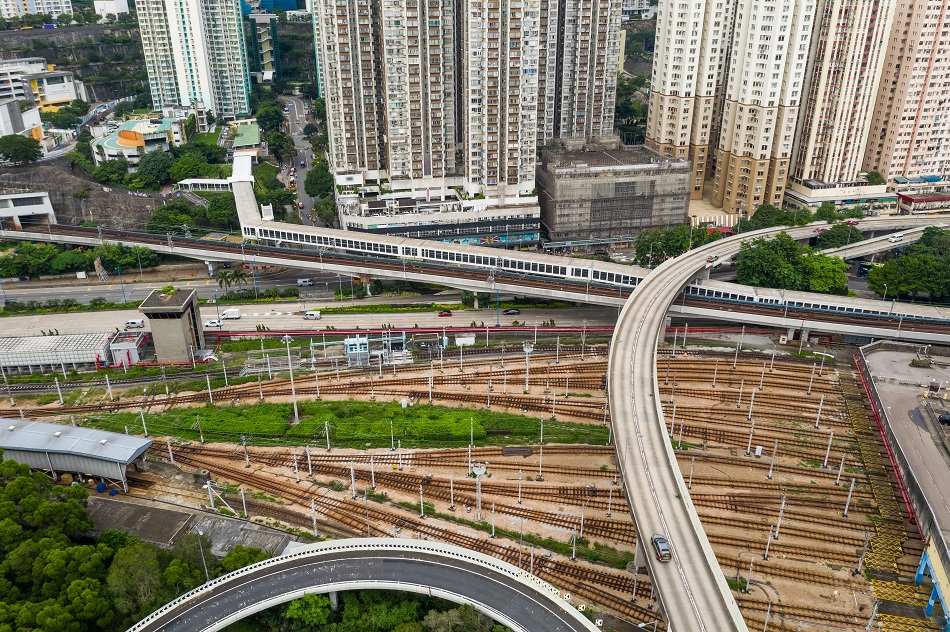
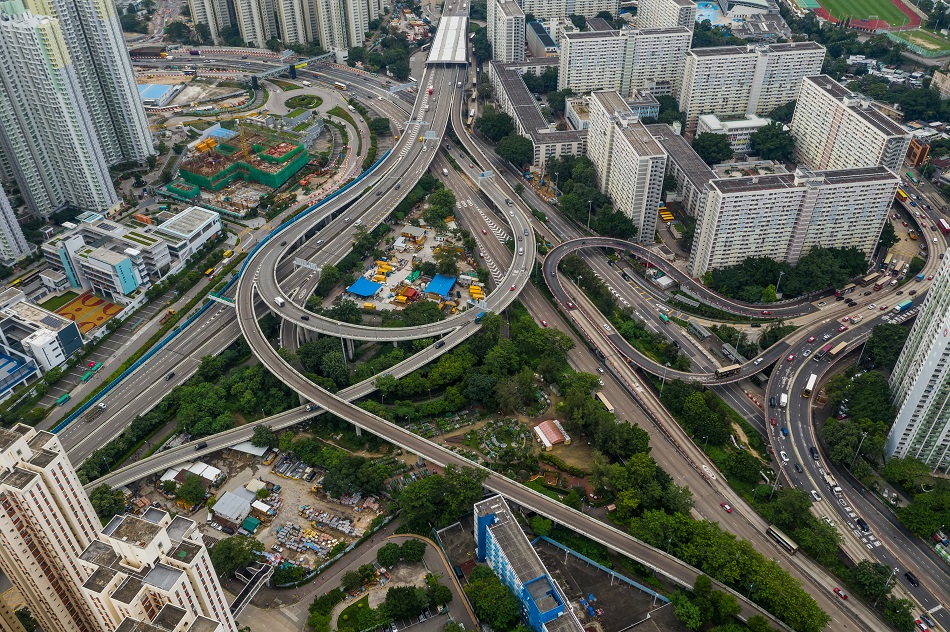
Multi-level roadways built in densely populated cities such as Tokyo and Shanghai make these cities global leaders in elevated interchanges. Their efficiency remains questionable, while the structures themselves are costly, technically complex, visually intrusive, and disruptive to the urban landscape.
More advanced AI-powered traffic-control systems help redistribute traffic flows and adjust signal patterns. This helps, but improving traffic flow is not the same as resolving congestion. Traffic jams are becoming “smarter,” but they do not disappear. To truly address the issue, part of the traffic must be shifted to a new, grade-separated level of urban space.
The Second Level: Untapped Urban Space
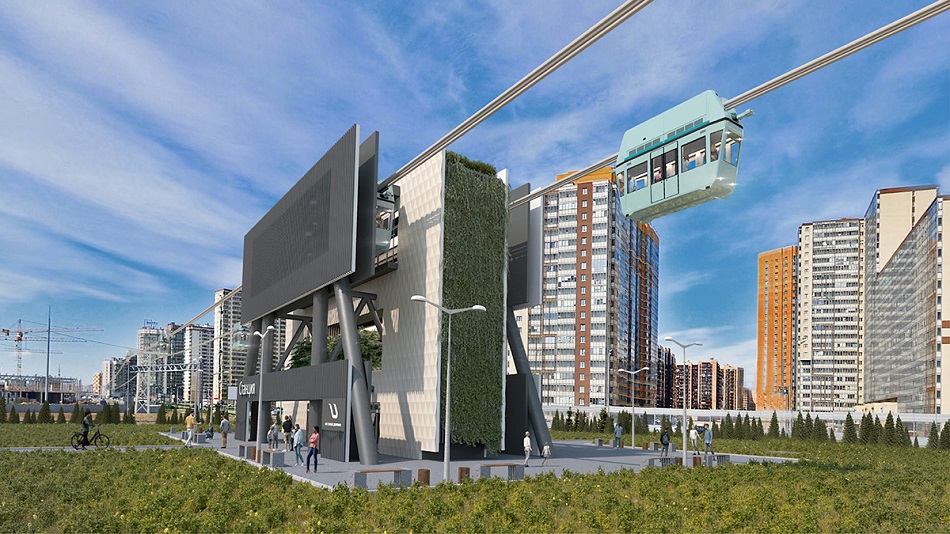
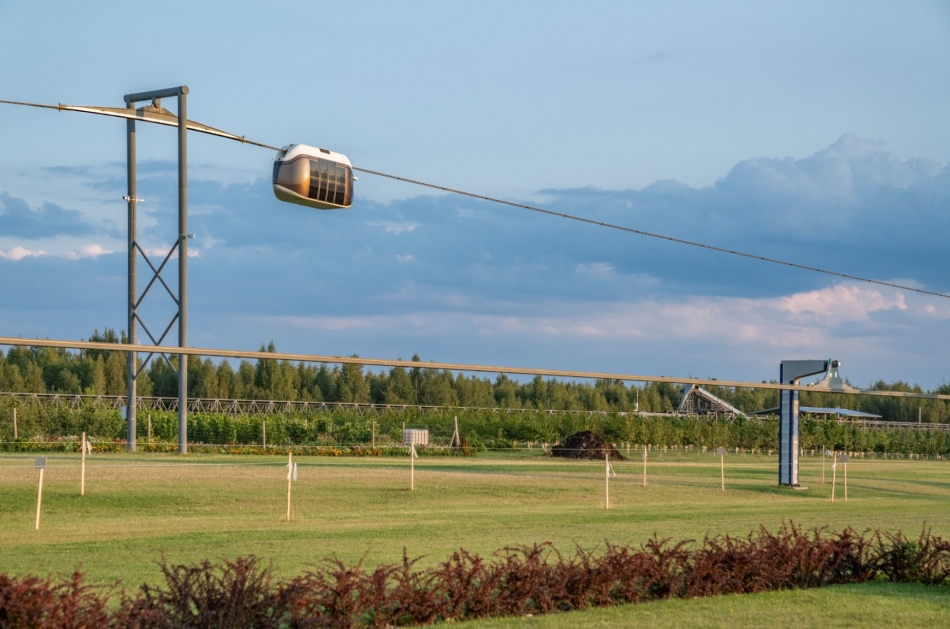
uST complexes use an elevated string rail overpass built above ground – occupying the unused urban space of the second level. This creates an independent transport system that does not intersect with cars, buses, bicycles, or pedestrians.
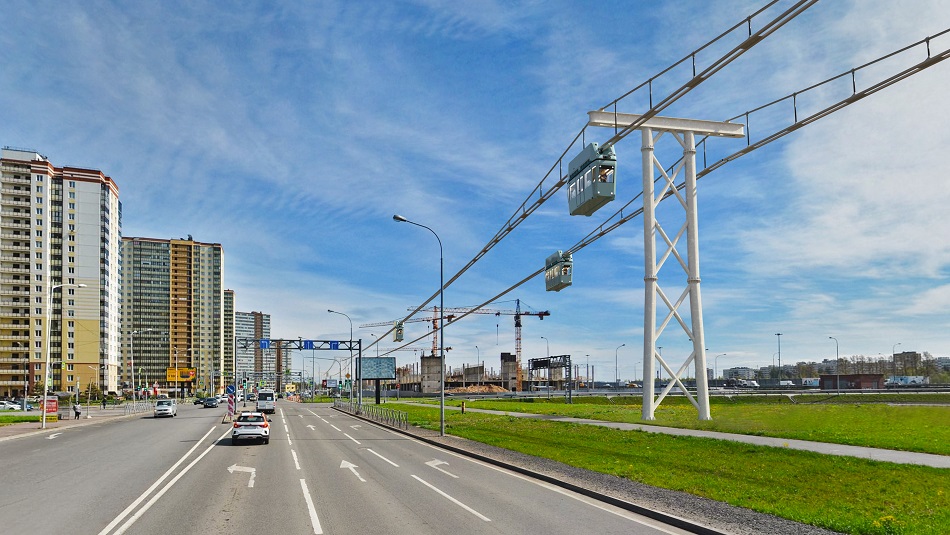
As a result, everything that happens on the roads below – overload, traffic jams, accidents, seasonal roadworks – does not affect the movement of autonomous electric vehicles (uPods) operating within uST complexes. This is what fundamentally distinguishes uST from technologies that try to improve traffic flow instead of bypassing them at the second level.
Thanks to the elevated level architecture, uST offers several undeniable advantages:
1. Non-stop movement. uPods travel along a continuous route without intersections or traffic lights. Start-stop motion is minimized, no jams occur on the track, and speed is maintained throughout the journey.
2. High throughput. A string rail overpass can handle 20,000–50,000 passengers per hour in one direction – comparable to a metro line, yet significantly cheaper to build.
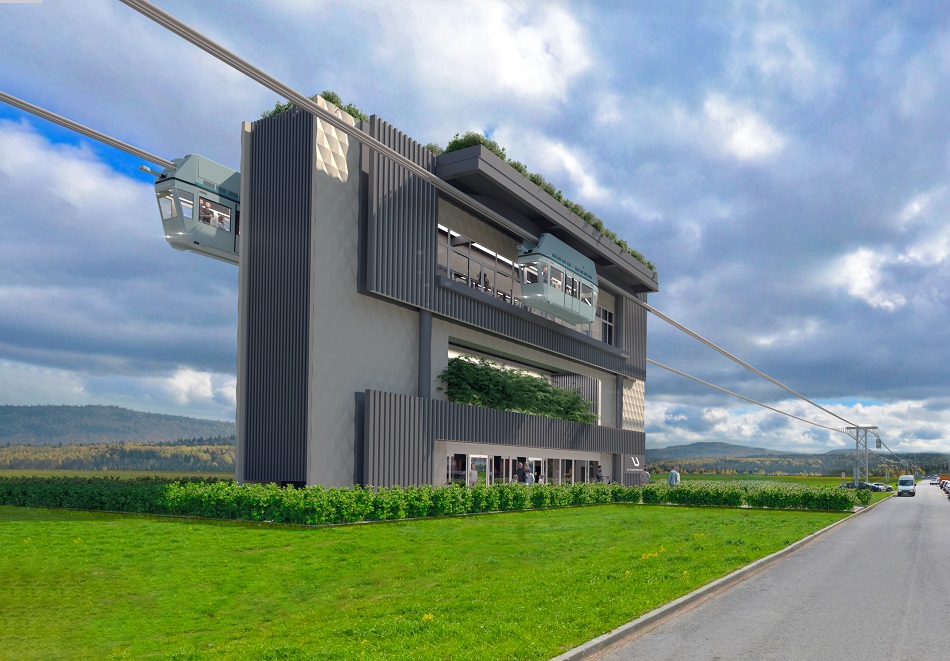
3. Minimal impact on urban infrastructure. Supporting towers require only 0.01 ha per kilometer and can be spaced up to 2,000 meters apart. Cities avoid large-scale land acquisition, district reconstruction, or years-long road closures.
4. Automated Control System. uST vehicles use advanced technologies including machine vision, lidars, radars, and self-diagnostics. uPods do more than simply move; they analyze the environment, optimize energy use, and ensure safety without operator involvement.
5. Low costs and high energy efficiency. Due to aerodynamics, direct routing, and the absence of stop-and-go traffic, energy consumption is 2–4 times lower than that of conventional road transport. This enables cities to build sustainable networks without excessive costs or environmental impact.
What Doesn’t Change the Fundamentals of Urban Mobility
Smart traffic systems, elevated road structures, and congestion zones are useful – but they operate within the outdated paradigm. uST complexes propose a new mobility architecture: instead of widening streets, they reduce traffic by offloading part of it to a higher level.
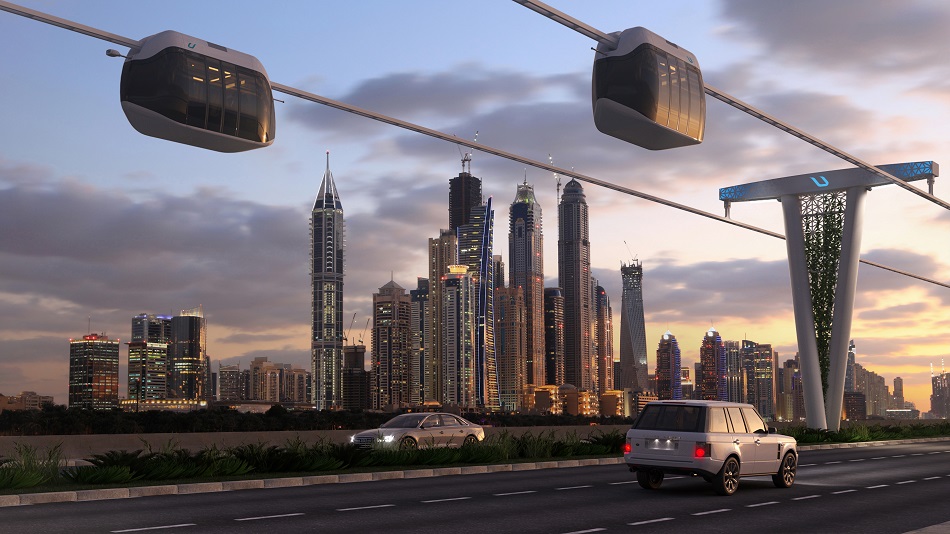
This approach not only reduces traffic density, eliminating traffic jams, but also minimizes their likelihood. This is what distinguishes the advanced technologies of the future from attempts to make the outdated model work more efficiently.
The Future Belongs to Multilevel Mobility
Megacities continue to grow, traffic volumes increase, and traditional solutions fall short. UST Inc. demonstrates that traffic jams are not inevitable – they are the result of trying to solve a modern problem within a single plane. In the future, cities will require a new, literally elevated level of mobility. And uST transport complexes already offer this today: safe, fast, environmentally friendly, and independent of ground-level congestion.
More news
News
26 November 2020
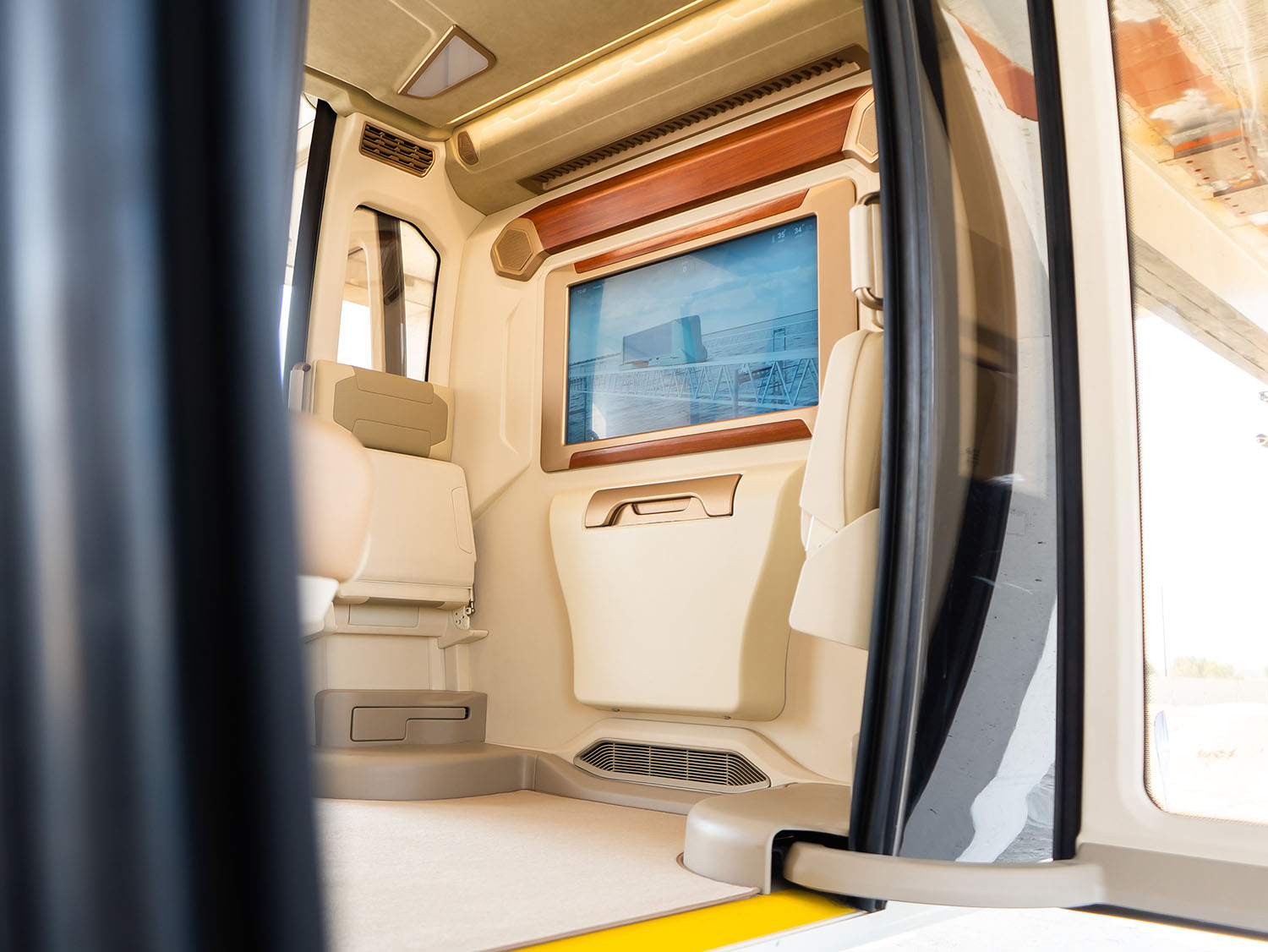
Unitsky String Technologies Inc. Successfully Completes the Construction of an Elevated Transport Complex in the UAE
United Arab Emirates — On November 26, 2020, the company completed an innovative transport complex at the Research, Technology and Innovation Park (SRTIP) in the Emirate of Sharjah.
News
3 October 2025
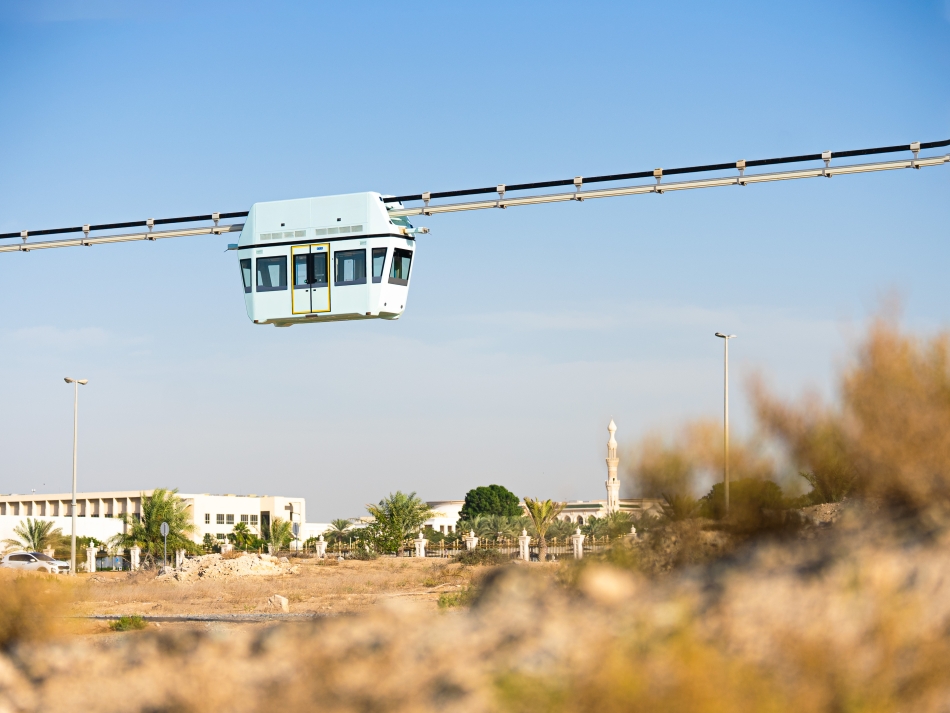
Engineers vs. the Desert: Premiere of UST Inc.’s New Film on the Construction of the Karat Complex
The film showcases the key experts in action and the obstacles they had to overcome to prove the effectiveness of string transport technologies to the world.
Blog
11 April 2025
String Rail Overpasses at EcoTechnoPark: Developments for Solving Any Logistical Problems
At EcoTechnoPark, the key track structures, that prove their effectiveness during testing, are presented.


