
How ecotourism can become a new driver of economic growth for various countries
In the 21st century, ecotourism has gone from being a niche activity to becoming one of the fastest-growing segments of the global economy. According to international organizations, sustainable tourism is expanding more rapidly than the traditional tourism industry, and its contribution to the development of regions with vulnerable ecosystems is becoming increasingly significant.
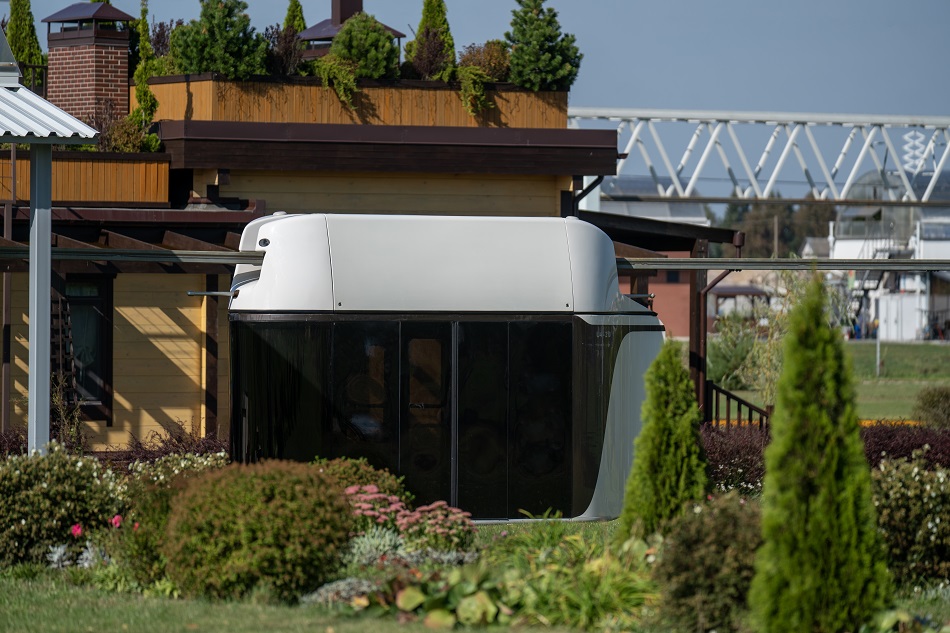
However, transport accessibility remains a key constraint for ecotourism in many countries. Traditional solutions are not suitable for a number of reasons: harmful emissions, lack of conditions for road construction, low profitability of routes with difficult terrain, and so on. This is where uST transport and infrastructure complexes come in, designed to overcome all of the above problems.
The economic potential of ecotourism
Ecotourism solves several strategic problems at once as it:
• Diversifies the economies of regions remote from major industrial centers;
• Creates jobs without destroying natural ecosystems;
• Stimulates the development of small and medium-sized businesses, from hotel construction to servicing local industries;
• Increases the investment and image appeal of entire countries or individual territories.

At the same time, the main paradox of ecotourism is that its development requires transport infrastructure, which in itself often becomes a source of environmental impact – deforestation, landscape fragmentation, increased harmful emissions, and constant noise.
Transportation – a key barrier to development
Traditional transportation infrastructure – such as highways, railways, reinforced concrete bridges, and complex interchanges – requires significant land acquisition and capital investment. In mountainous areas, on islands, in coastal zones, and in nature reserves, their construction is either economically unfeasible or environmentally unacceptable. As a result, the tourism potential of such areas remains unrealized.

These areas require fundamentally different transport solutions that ensure accessibility without environmental damage. uST transport and infrastructure complexes fit organically into the concept of ecotourism thanks to a number of systemic advantages, including:
• Minimal land use – the route is located on supports, which preserves the soil cover, unique vegetation, and animal migration routes;
• Low energy consumption – electric drive and battery storage, as well as steel wheels, provide higher energy efficiency compared to motor vehicles;
• Zero emissions and low noise levels, which is critical for natural and recreational areas;
• Flexible routing – the ability to lay routes over water, swamps, gorges, and protected areas without significant construction costs;
• Integration with tourist infrastructure – stations can be built into hotel complexes, eco-farms, resorts, and recreational complexes.
Economic impact
The use of uST technology in ecotourism makes it possible to establish a sustainable model for regional development. Tourists gain fast, comfortable, and environmentally safe access to natural sites, while the region receives a stable source of income without degrading the environment. A clear example is the Belarusian Ecopark Aquarelle, where UST Inc. built the environmentally friendly and safe uLite transport complex.
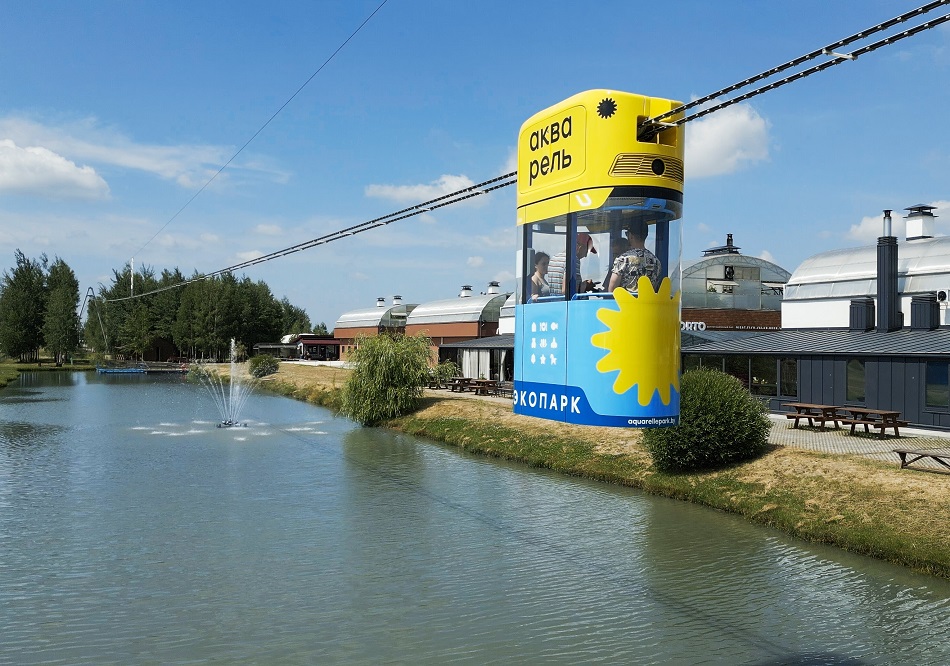
This is especially important for developing countries: uST transport and infrastructure complexes can be an alternative to expensive road construction and, at the same time, a tool for attracting investment and tourist flows. For developed economies, it will also be a way to reduce the burden of human presence and preserve unique landscapes for future generations.
A new vector for a sustainable economy
Today, ecotourism is not just a form of recreation, but an economic strategy in which transport plays a key role. uST solutions make it possible to combine what once considered incompatible: increased mobility, economic efficiency, and care for the environment.
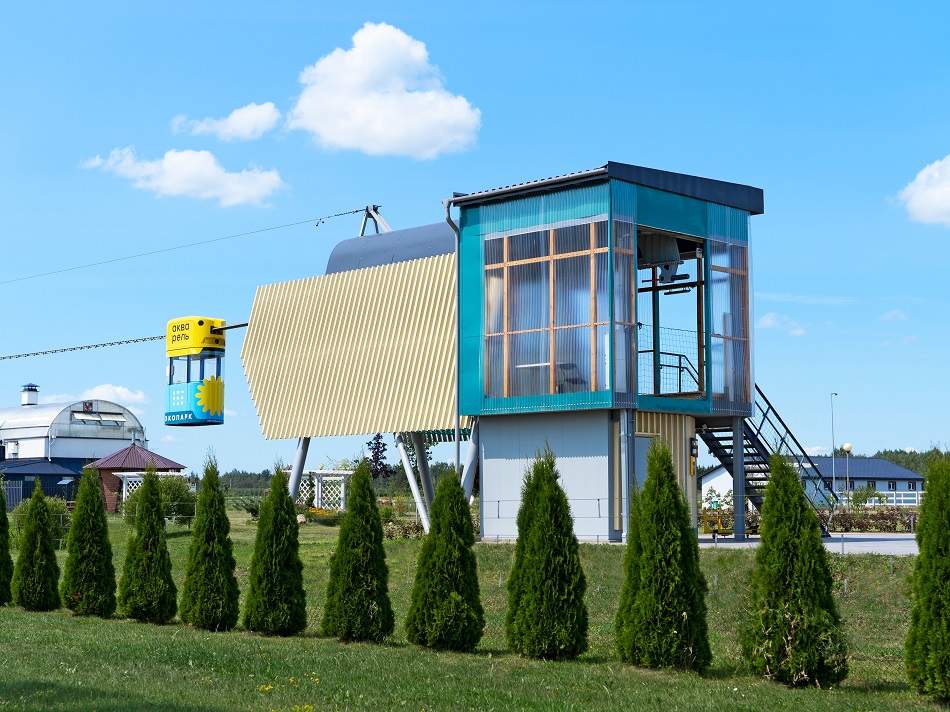
Amid global demand for green technologies and sustainable development, uST transport complexes are becoming an important tool for shaping a new economy – one whose growth does not come at the expense of the environment.
More news
Opinion
22 April 2022
Review on the “Popular Mechanics” Magazine Website: uST Inc. Transport Shown in a Movie?
In one of the episodes of the Hollywood film “The Island”, a mode of transport was shown that exclusively resembles the technology invented by Anatoli Unitsky, the author of the string transport. Moreover, the general design engineer of Unitsky String Technologies Inc. long before that proposed to the world the idea of the “second level” transport. Did the filmmakers decide to take advantage of it?
News
20 September 2024
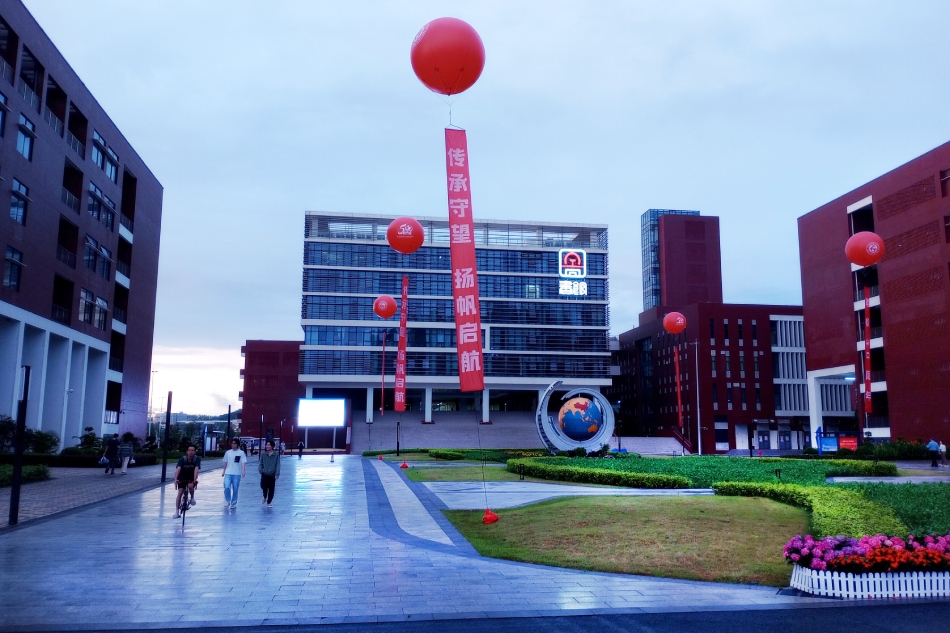
Unitsky String Technologies Inc. Held a Lecture at the Vocational and Technical College of China
In September, the students of Guangzhou Railway Vocational and Technical College learnt about the advantages of uST technology
News
14 July 2025
UST Inc.'s Financial Statements Have Been Reviewed as Part of an International Audit
Unitsky String Technologies Inc. has completed an audit of its financial statements for 2024 in accordance with International Financial Reporting Standards (IFRS).


